Conical Spring About
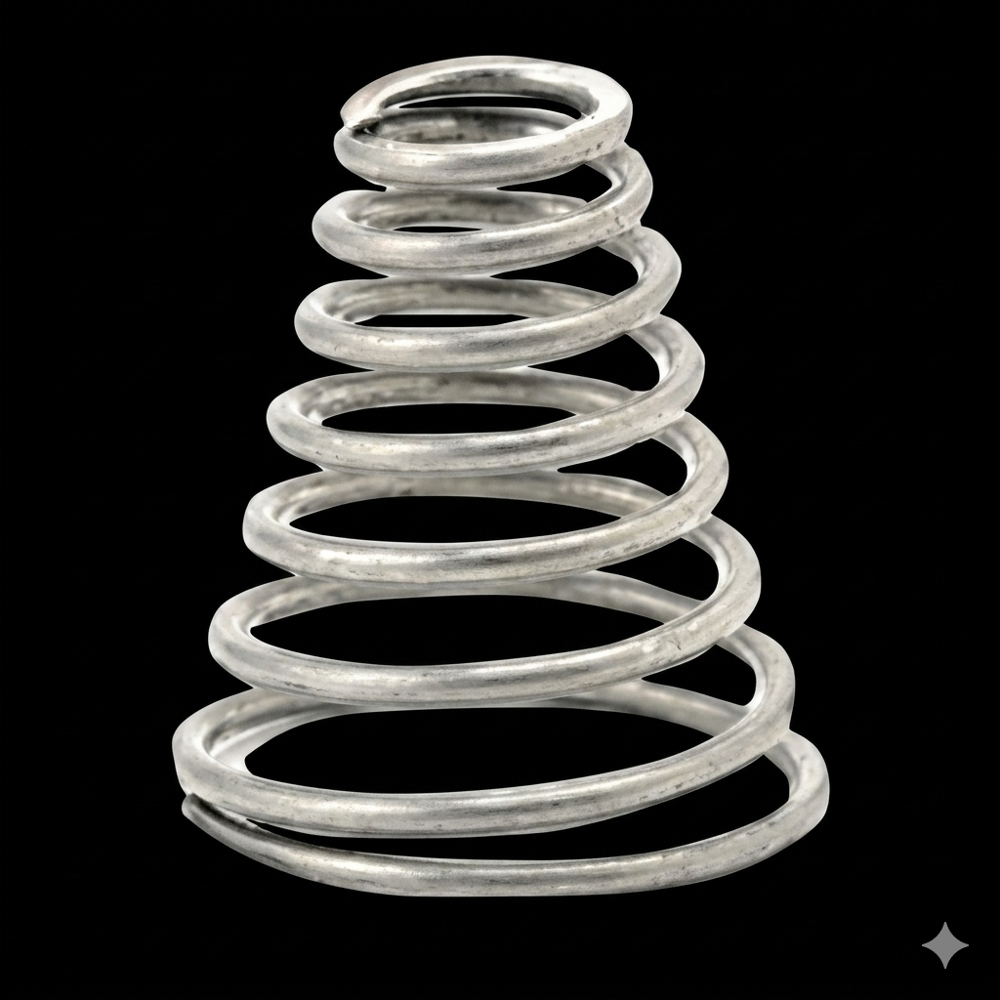
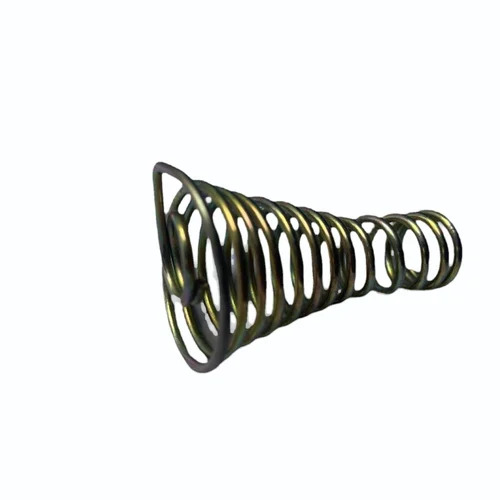
The spring is made of a thick, silver-colored wire with a matte, slightly textured metallic finish that catches subtle lighting. It is oriented vertically, tapering from a wide, broad base at the bottom to a much narrower coil at the top. The individual coils are evenly spaced and wrap around to form a distinct pyramidal or conical silhouette, with the lower rings reflecting slightly onto the dark surface beneath them.
Optimized Design for Progressive Spring RateThe tapered shape and open ends of this conical spring ensure a progressive spring rate, adapting to varying load requirements and minimizing the solid height. This unique geometry makes it especially suited for applications where space constraints and performance adaptability are crucial, like battery holders or electrical contacts.
Engineered for Durability in Harsh ConditionsFabricated from high-grade stainless steel, this spring is highly resistant to corrosion and built to endure extreme temperatures, ranging from -40C to +250C. The polished finish not only enhances its aesthetic but also reduces friction, contributing to a longer operational lifespan.
FAQ's of Conical Spring:
Q: How does the conical shape benefit spring performance in my application?
A: The conical geometry enables a reduced solid height when compressed, providing a progressive spring rate. This means the spring responds predictably to varying loads, making it ideal for tight spaces and applications needing consistent, adaptable force.
Q: What environments is this conical spring suitable for?
A: With its high corrosion resistance and ability to function between -40C and +250C, this spring is well-suited for harsh conditions including outdoor, chemical, or high-temperature settings.
Q: When should I consider using a conical spring with open ends?
A: Choose this spring design when you need reliable axial compression, require minimized block height, or desire progressive force characteristics-common in electrical contacts, battery holders, or precise valve assemblies.
Q: Where is this spring typically installed or used?
A: It finds primary use in devices such as battery compartments, electrical connectors, and fluid control valves-anywhere compact, reliable axial force over a variable height is required.
Q: What is the process for verifying the spring's fatigue life?
A: Each spring undergoes standard fatigue cycle testing for compression springs, ensuring it meets or exceeds industry durability requirements before being delivered to clients.
Q: What are the key benefits of a polished and smooth finish?
A: The polished finish reduces surface friction and helps prevent debris accumulation, leading to smoother operation, reduced wear, and a longer service life in demanding environments.




 Send Inquiry

 Send Inquiry
 Send Inquiry
 Send SMS
 Call Me Free